SEEC
Designing a wellbeing app for young people who needed support, not surveillance.
Te Whangai Trust · Native Android, designed for low-spec devices · Trauma-informed architecture · Shifted the Trust from periodic reviews to seeing distress as it develops
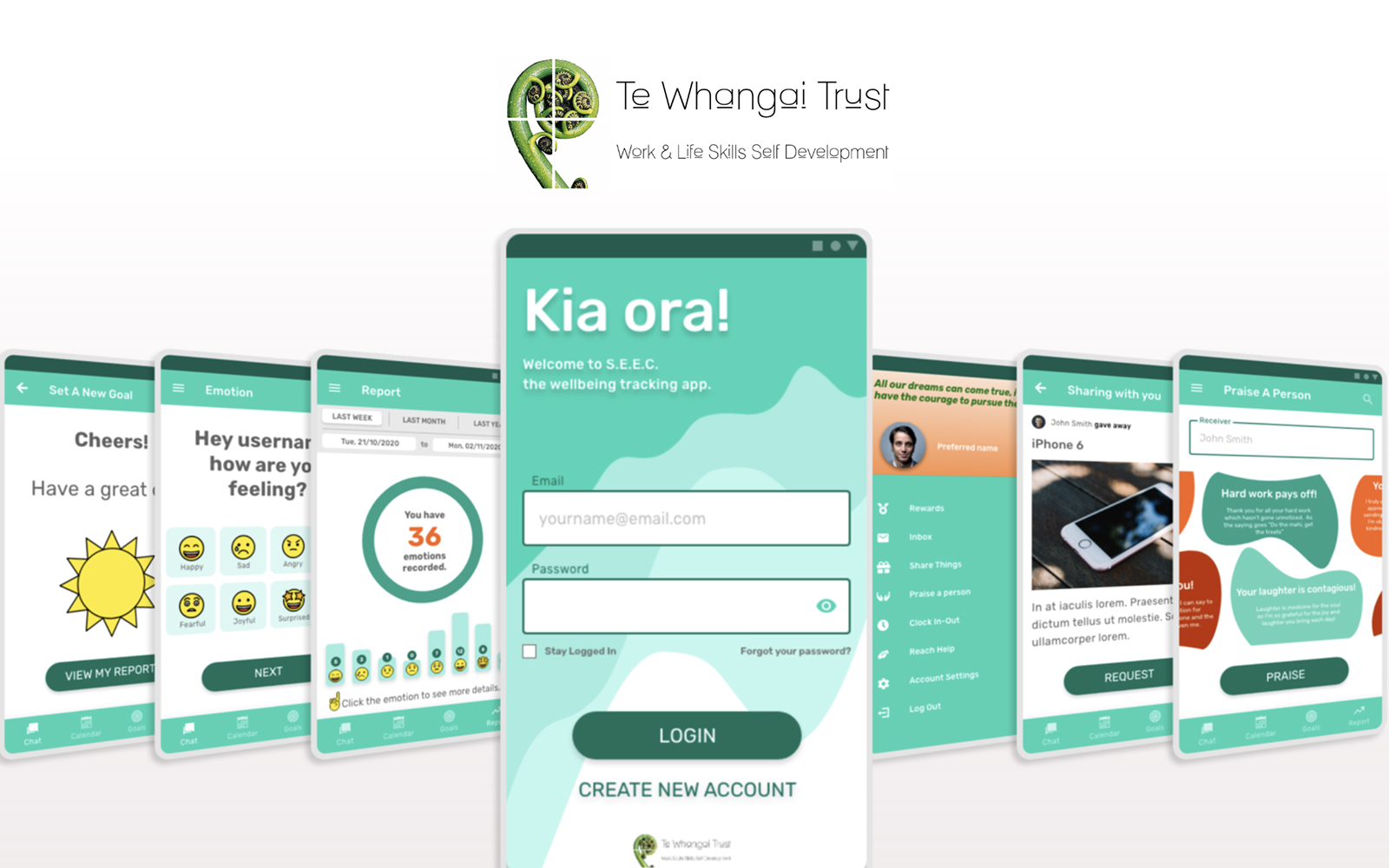
Noticing before it becomes a crisis
Building a tool that helps an organisation spot when someone is struggling before it becomes a crisis.
Te Whangai Trust employs young people who have come through significant hardship, including criminal records and difficult family backgrounds. Support workers were finding out someone was in trouble at the next scheduled review, which was often weeks after it started.
The design problem was uncomfortable. The same daily check in that lets a support worker reach out at the right moment is, from the other side, a system logging your feelings for your employer. Get the framing wrong and you have built monitoring for a group of people who have had plenty of that already. Every decision in the app runs back to that tension.
The Trust wanted to prove the model internally first and then take it across New Zealand.
The vision:
Foundation
A simple daily mood check in, to build a habit of reflection.
Growth
Goal setting and mentorship, for longer term personal development.
Community
A digital safety net where users share experiences, mentor each other, and exchange resources inside a trusted network.
When the test refuses to answer
The most important design decision in the app came down to a test.
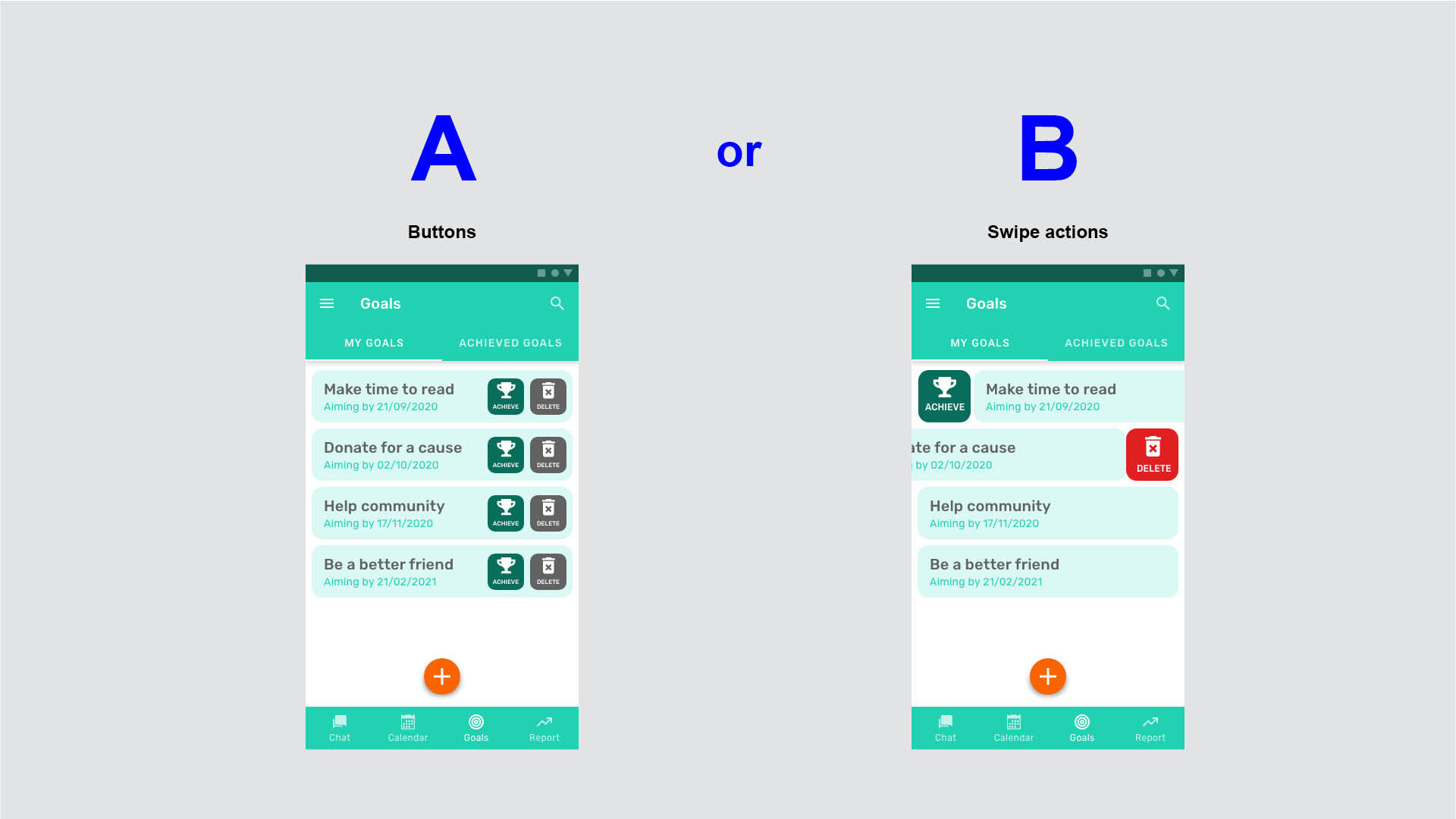
Goal management is the core of SEEC, the place where a young person sets a goal, tracks it, and sees themselves moving. Getting that interaction right mattered more than anywhere else, so I ran an A/B test on two approaches.
Variant A — Buttons
Visible actions, high scannability, but the interface felt clunky and repetitive down a list of goals.
Variant B — Swipe actions
Cleaner and faster once learned, at the cost of discoverability. Some users could not find the actions without a visual cue.
The results split almost evenly, which was the most useful thing the test could have told me. A clear winner would have made the decision for me. An even split meant the data had handed it back, and I had to decide on something the test could not measure.
I chose swipe actions. These users would be in the app daily as part of a routine, not once, so the cost of learning a gesture is paid one time and the benefit of a fast uncluttered interface is collected every day after. The app needed to be lived in, not figured out.
The devices they actually had
Designing for the full range of Android devices these users would actually have.
This was native Android, and that shaped everything. The young people using SEEC would be on whatever phone they had, which mostly meant older and lower spec devices from a spread of manufacturers. An interface that only felt good on a current flagship would have failed the people it was built for.
I used Material Design patterns throughout so the app felt familiar from the first session rather than asking anyone to learn a new visual language. A native bottom navigation bar put the four pillars one tap away: goals, emotions, community and progress.
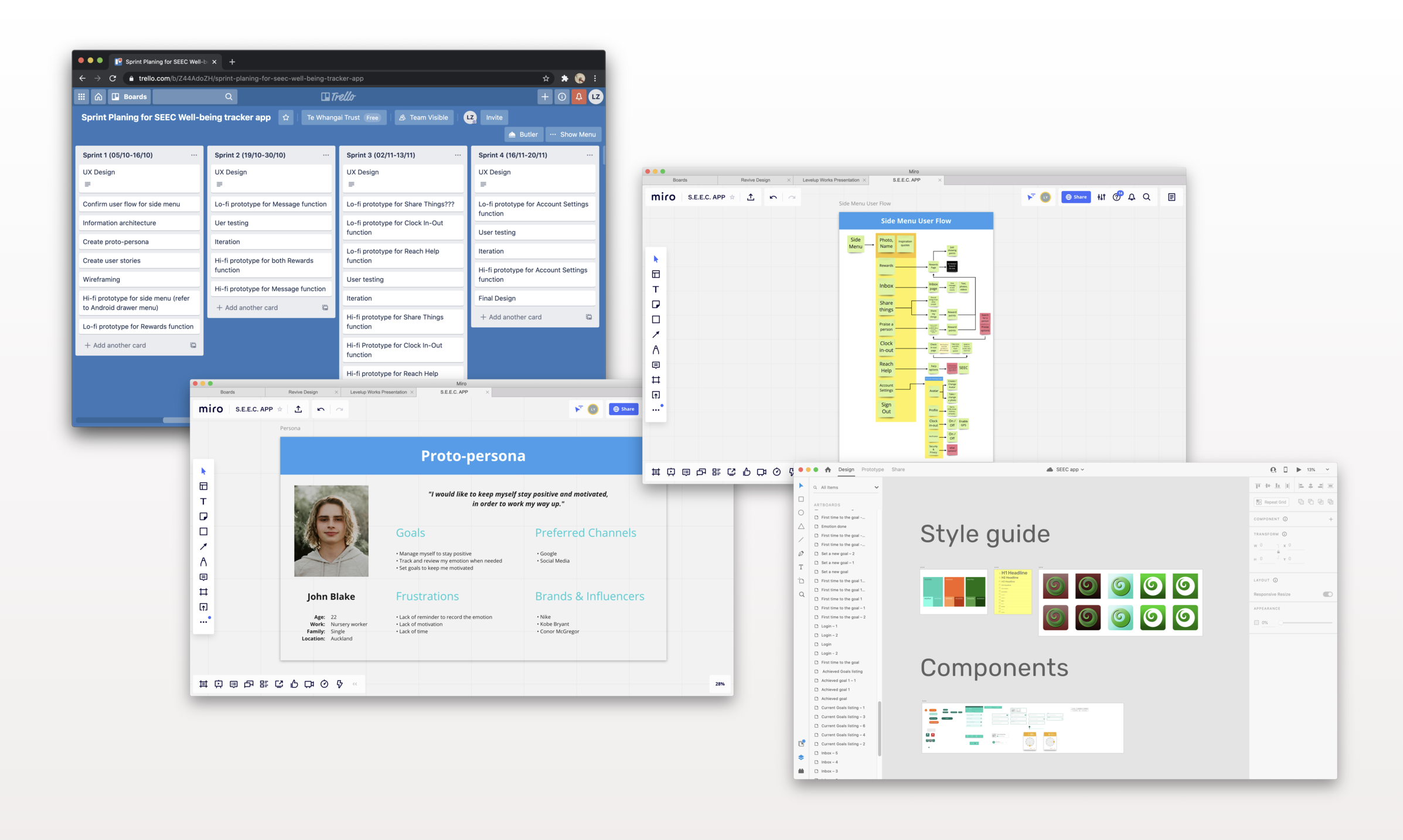
What changed
From weekly check-ins to a living picture of how each young person is doing.
Before SEEC the Trust ran on disconnected manual records and periodic reviews, so by the time anyone identified a problem it had usually had weeks to grow. That is the thing the app changed.
Managers now see emotional trends as they develop and can reach out at the moment it matters rather than at the next scheduled session. For the young people, having a visible record of their own moods and achievements produces something difficult to manufacture any other way: evidence of their own progress, in their own hands.
And because mentorship and peer support are built into the product rather than run as a separate programme, giving back became part of the daily routine.
SEEC was designed to feel like it belonged to the people using it. That sense of ownership is what makes the support work.