MyEnviro
Two weeks to untangle a trust problem between farmers and their regional council.
Hawke's Bay Regional Council · Two-week design sprint, end to end · Two stakeholder workshops, one reframed problem, three screens shipped
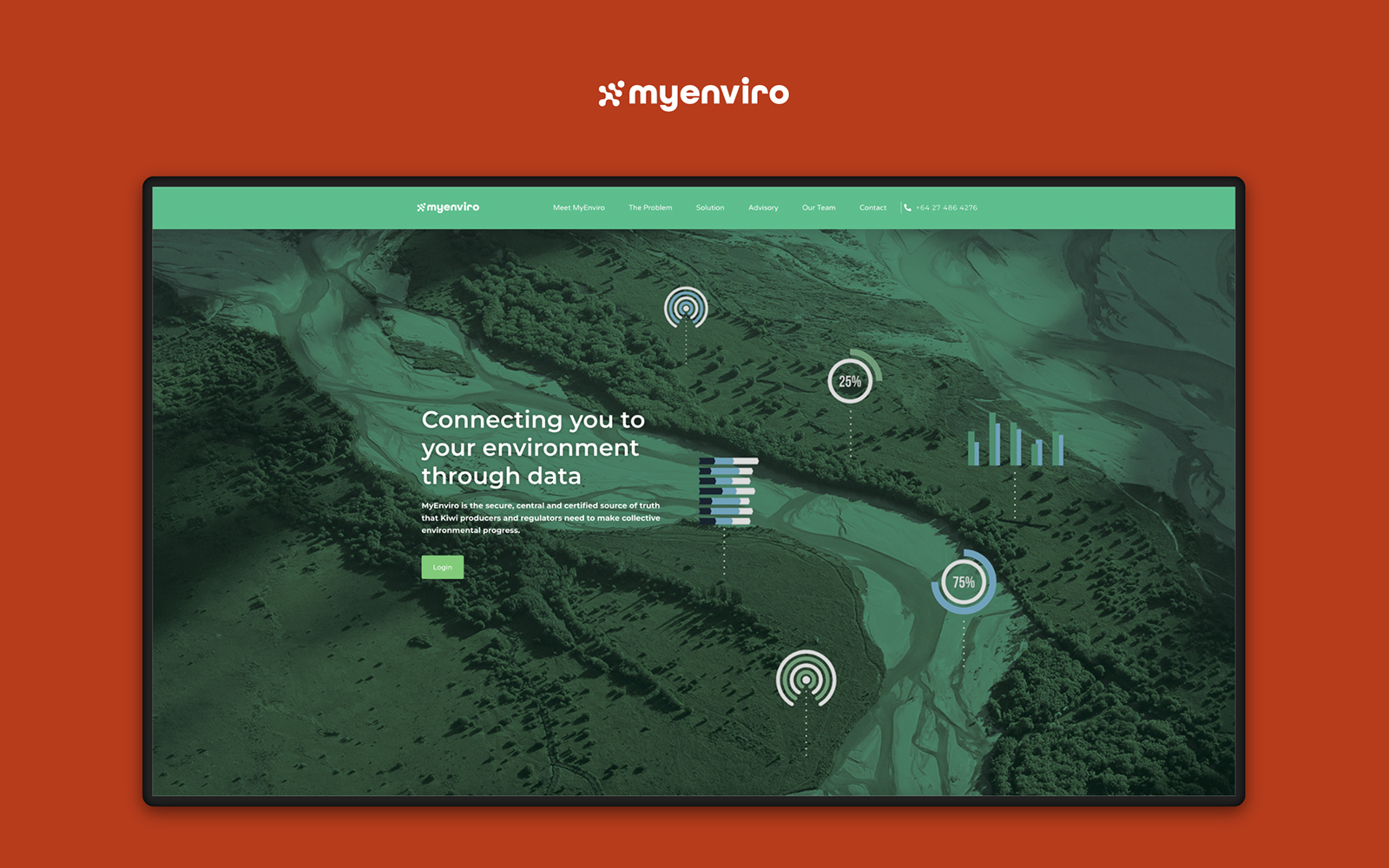
Two weeks, and I spent three days not designing
A two-week window to go from nothing to a fully designed and prototyped feature.
Hawke's Bay Regional Council needed a feature inside the MyEnviro platform, Right Tree Right Place, to help council staff and farmers manage sustainable land use from shared environmental data. I had two weeks to design the whole experience.
The obvious move under that kind of clock is to start drawing. I ran two intensive workshops first instead, with council staff and farmers in the same room, which cost me a fifth of the total time available. It was the decision the rest of the project depended on.
Those workshops produced something more valuable than a list of requirements. They revealed the real problem.
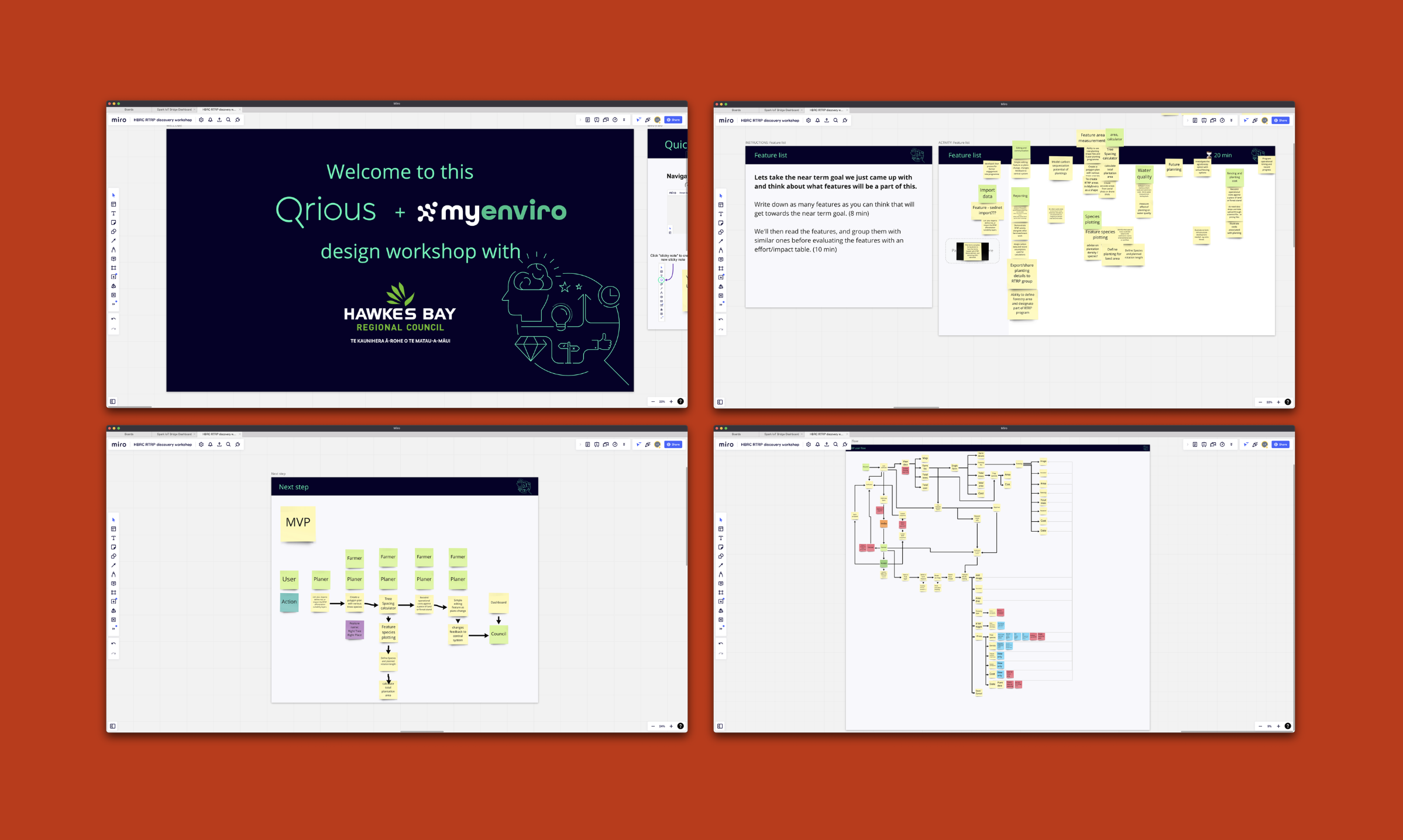
The data problem was a trust problem
The platform had a data problem. But underneath it was a trust problem.
MyEnviro had been built as a one way reporting tool. Farmers submitted data, the council reviewed it. What came out of the workshops was that farmers had no visibility into what the council could see, or how their submissions were being assessed. They were sending information into a black hole.
That opacity had broken trust in both directions. Farmers felt monitored rather than supported. Council staff were absorbing a constant stream of clarification emails that slowed every approval down.
Which made the design decision simple, once the problem was named properly. Both parties needed to see the same data at the same time. Not a reporting tool and a separate review tool. One shared view. Everything after that followed from it.
One screen, two very different users
Making the Right Tree Right Place feature work meant making it work for two very different users at once.
The design centred on a shared real time environment where council staff and farmers work on the same map and the same datasets simultaneously. An administrative process became a working tool rather than a paper trail.
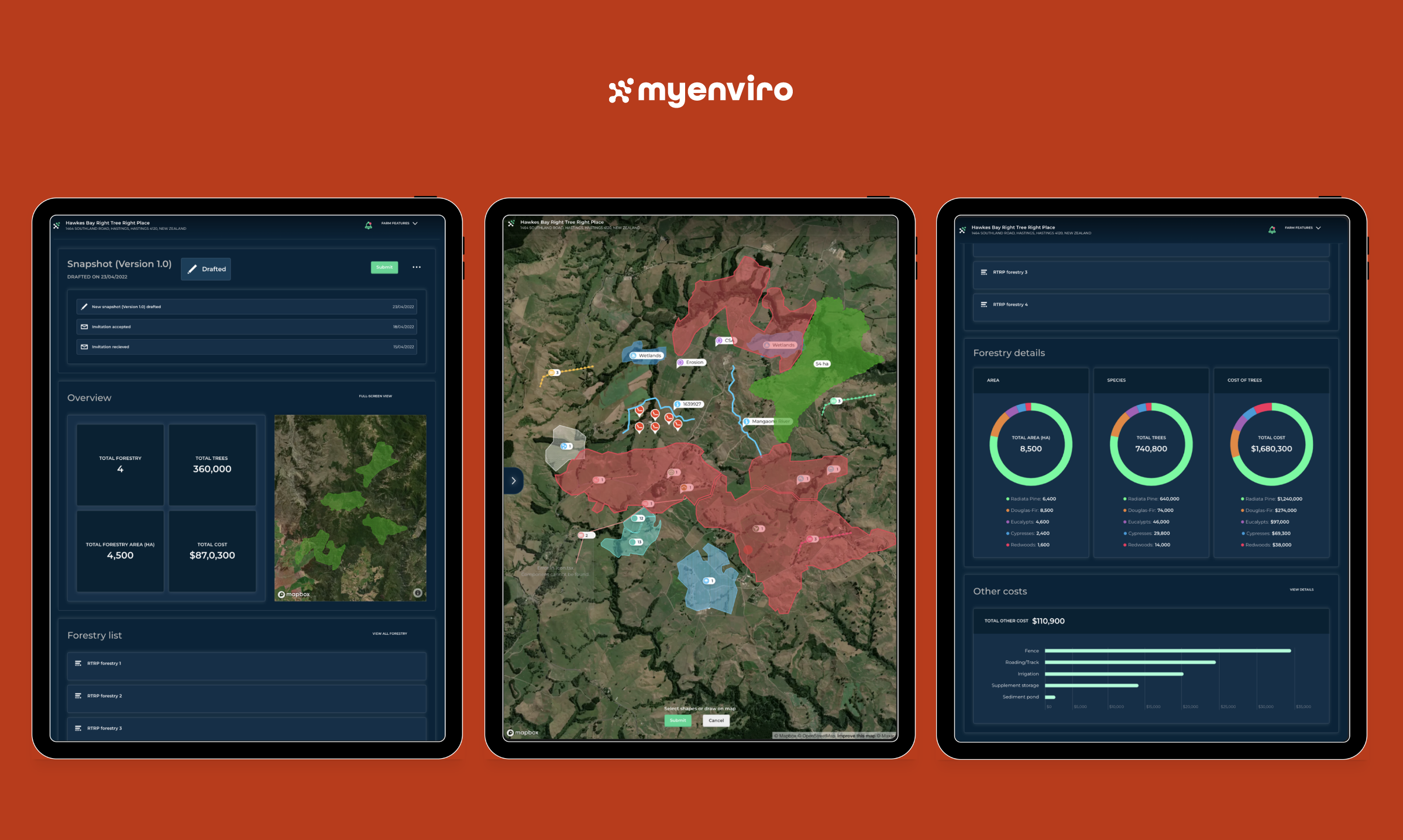
Overview dashboard
An immediate summary for both parties of where things stand: planting totals, land classes, forestry lists and status at a glance. Nobody waits for a report to understand the current picture.
Map view
Environmental data layered directly onto farm boundaries, so a farmer can see exactly where and what to plant, and council staff can assess a submission in full geographic context. What used to take several documents and a site visit fits on one screen.
Forestry data view
Detailed analytics as clear charts and status indicators, replacing dense written reports with something both sides can read and act on without specialist knowledge.
Together the three screens turned a slow, trust eroding approval process into something closer to a shared workspace than an audit.
What the three days bought
Full design delivered in two weeks. The approach became the template for what came next.
Holding onto discovery under time pressure meant the design work that followed was fast, because the structural decisions were already made. By prototyping I was executing rather than deciding, and the engineering team got what it needed on time and without ambiguity.
The shared view removed the clarification loop between farmers and council staff that had been the single biggest source of friction. Approvals moved faster, communication cost dropped, and both sides had something they had not had before: a reason to trust the process.
The sprint became the template for how we ran the ones after it.