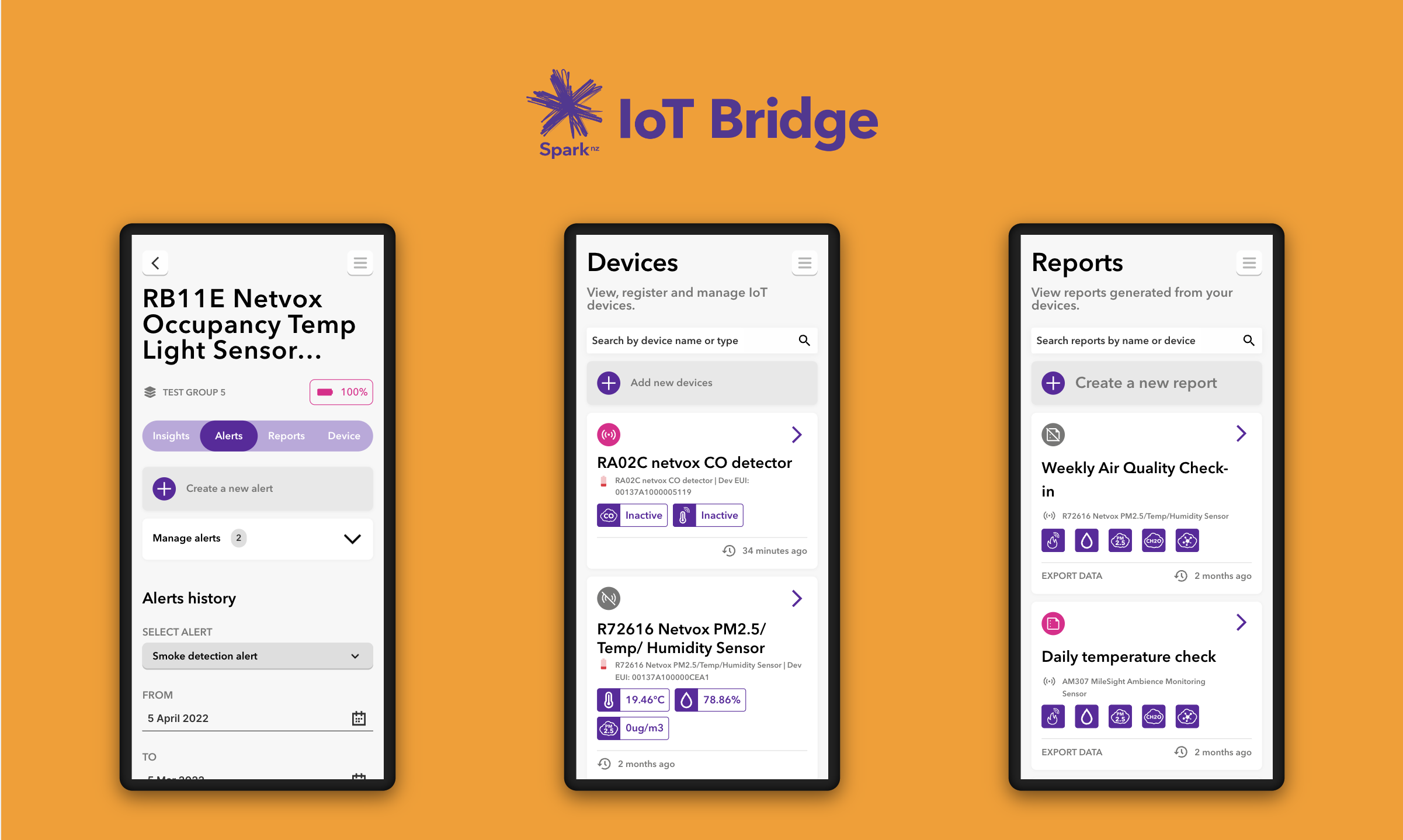
Spark IoT Bridge
Hundreds of devices, one screen, and operators who cannot afford to miss an alert.
Spark IoT Bridge, connected device management for major New Zealand organisations · Full UX audit, first component library, and a role-configurable dashboard
Before touching a pixel
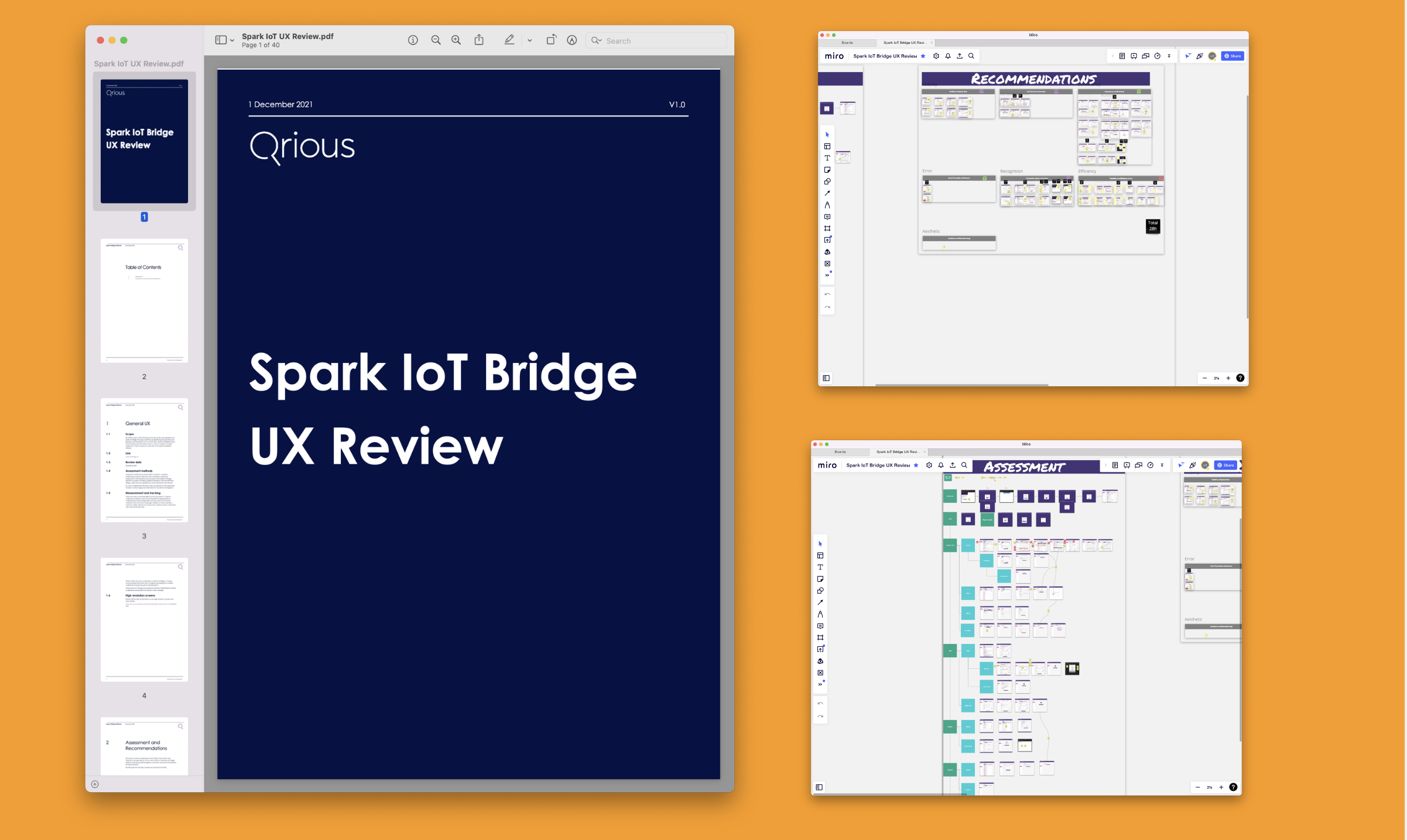
Before touching a single pixel, I needed to understand the full scale of the problem.
Spark IoT Bridge manages connected device ecosystems for some of New Zealand's largest organisations. By the time I joined, it had absorbed years of inconsistent design decisions made under delivery pressure.
The tempting move was to start redesigning screens. I ran a full UX review of the entire product instead and wrote a formal audit report documenting every place the interface created friction. It cost time up front and it bought something worth more.
The audit gave the team something they hadn't had before: a shared, evidence-based picture of the problem.
No more competing opinions about what felt wrong. A structured account of where the platform was failing its users and why, which then settled every design argument that followed by pointing at evidence rather than taste.
Fixing screens would not have worked
The audit pointed to one root cause: there was no shared design foundation.
Patching screens one at a time would have produced a slightly nicer version of the same problem within a year. I led the design of a component library built specifically for the density this product carries, rather than adapting something built for marketing pages.
With reusable components covering everything from inputs to data displays, designers and engineers worked from the same building blocks for the first time. Features got faster to build, and the visual debt that had accumulated over years came down systematically instead of being repainted.
One layout could not serve them all
With a solid foundation in place, the real design challenge could begin: making complex data readable under pressure.
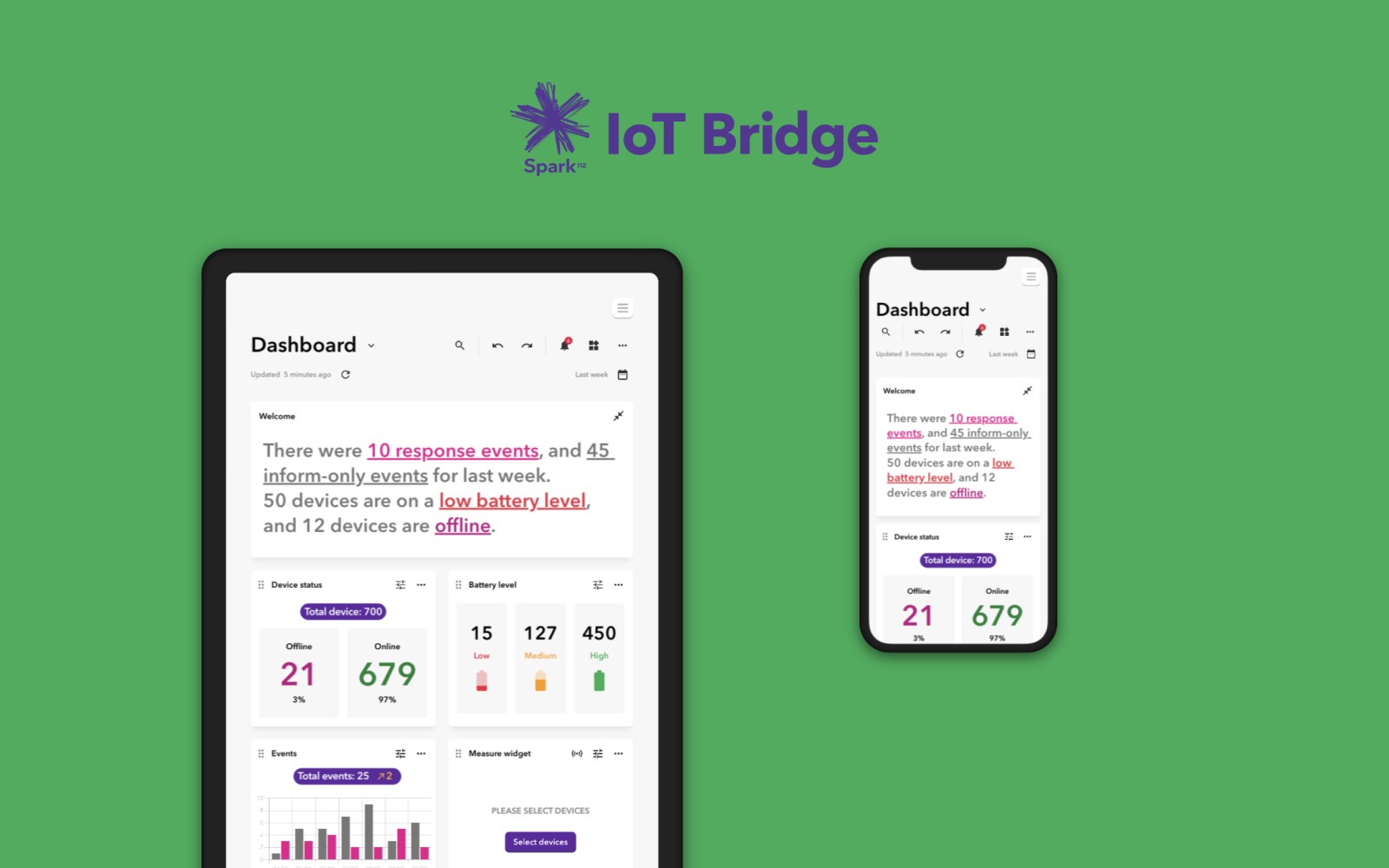
The dashboard had to serve operators monitoring hundreds of devices at once, in different contexts, with different responsibilities. A network engineer and an operations manager need almost nothing in common from the same screen.
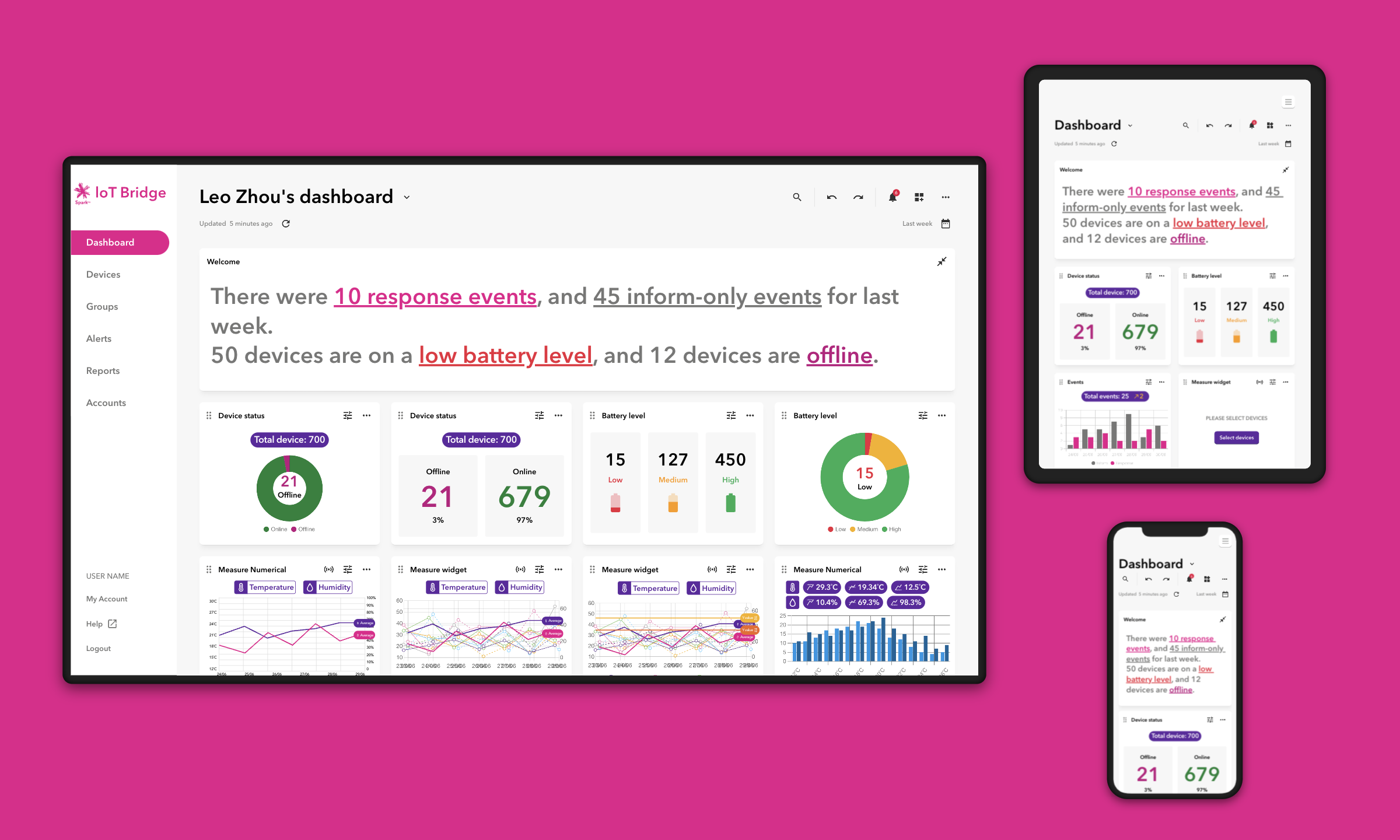
A single fixed layout would have compromised both. So I built a modular widget system and let each operator configure their own view around what their role actually requires.
Custom views
Operators select and arrange the data cards relevant to their responsibilities. The dashboard reflects how they work, not how the system was built.
Night and day modes
Monitoring happens across long shifts and in low light control rooms. This is a standard feature with a direct effect on how reliably someone can read a screen at 4am.
Smart hierarchy
Progressive disclosure kept the full depth of the analytics available without crowding the primary view. Operators stay oriented at a glance and go deeper only when something demands it.
What changed
A platform rebuilt from the foundation up, ready for what comes next.
The shift from reactive patching to systematic design changed both how the product felt and how the team worked. Features that used to require significant rework were now assembled from proven shared components. The interface got faster to move through and easier to trust, which for a monitoring tool is the whole job.
The finished product tells the operator's story end to end: a clear view of live alerts, a fast way to find and manage any device, and a reporting layer that feeds the rest of the business.