Valocity
Four product teams, three countries, one design language, and 80% fewer design queries.
Valocity, bank-facing property valuation across NZ, Australia and India · Architected the Quantum Design System · Client onboarding from days to minutes · White label clients including ING, HSBC, Commonwealth and Westpac
Not a visual problem
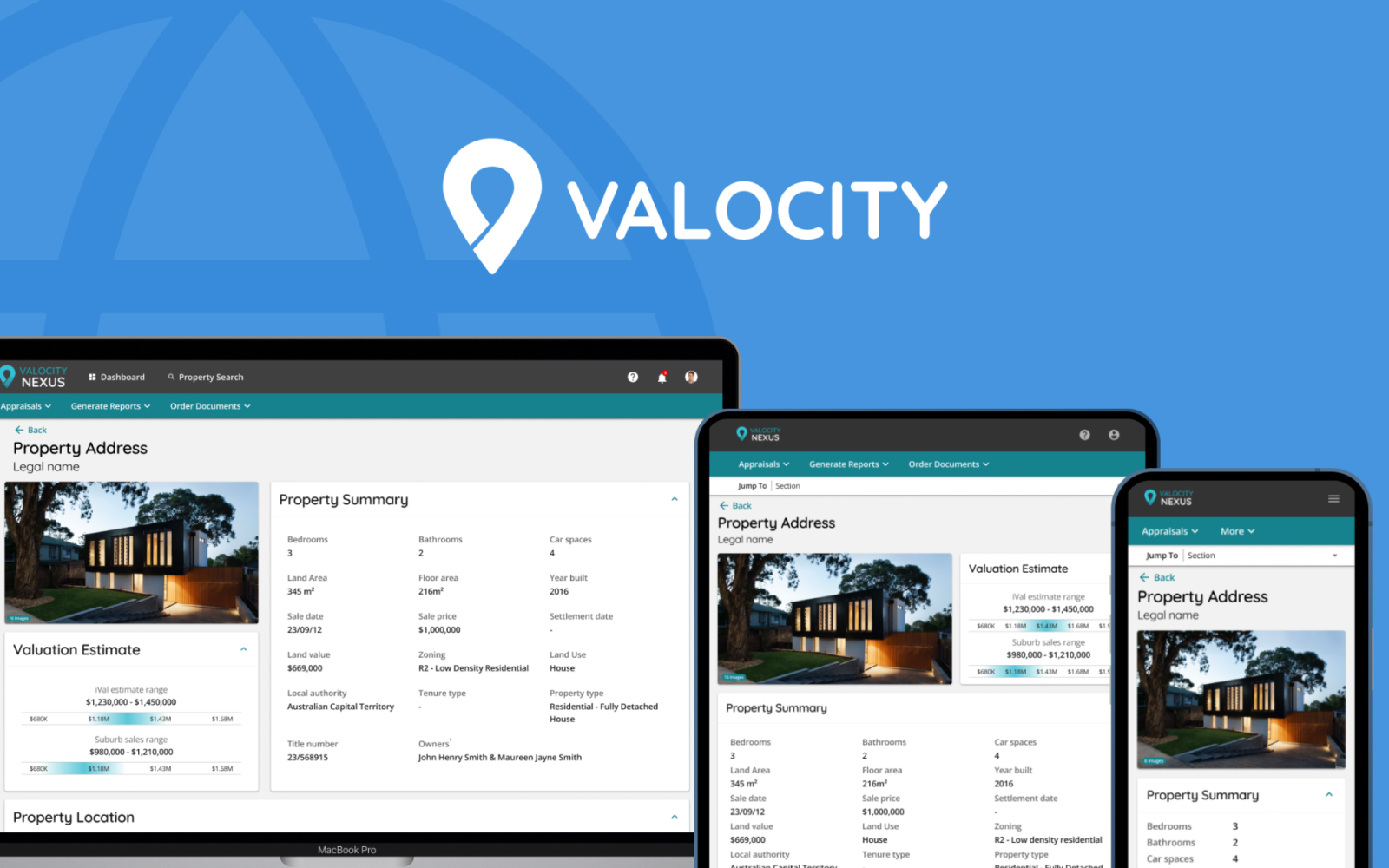
Valocity serves major banks across New Zealand, Australia and India. Rapid growth had left four product streams operating as disconnected islands, each solving the same problems in its own way. The visible symptoms were design debt and inconsistent experiences.
The real problem was underneath. Every new bank integration was slow because there was nothing shared to build it from, which meant consistency was not a tidiness issue, it was a constraint on how fast the company could sell. I put it to the team as a scalability crisis rather than a style guide problem, because that is the version the business could act on.
Quantum Design System
Four product teams. Three markets. One design language.
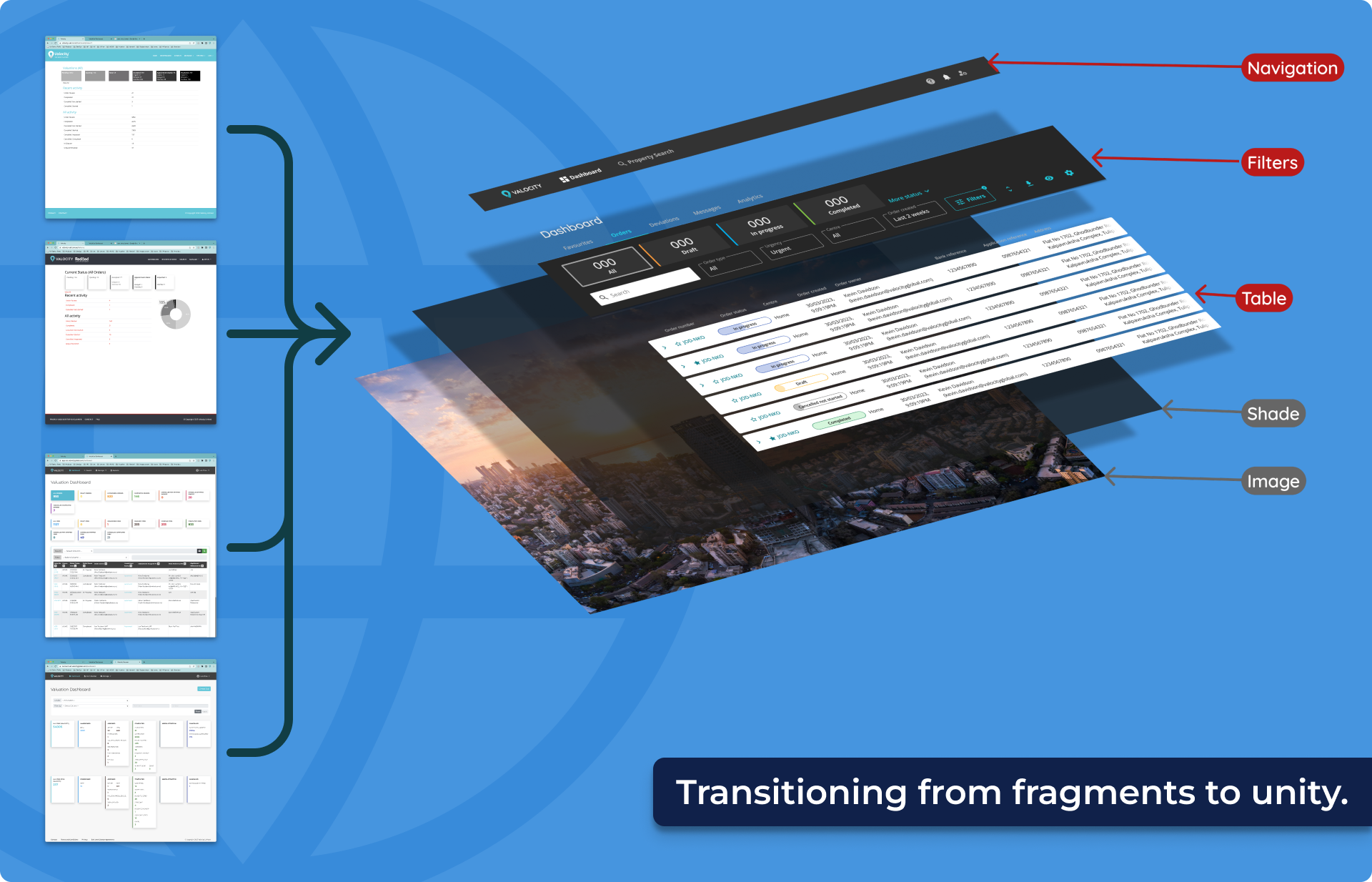
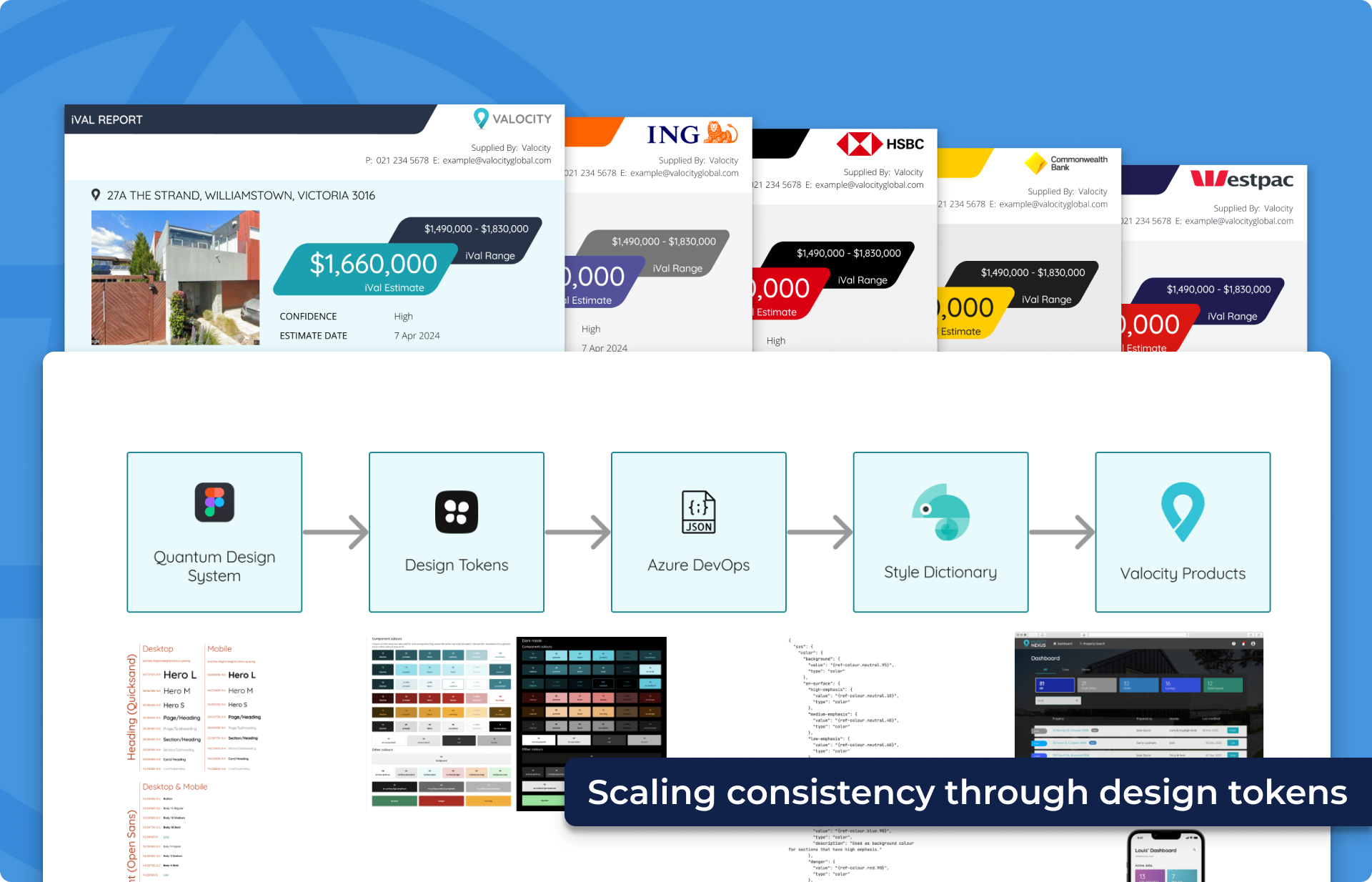
I architected the Quantum Design System: a multi-tiered design token structure, a reusable component library, and above both, a tier of universal patterns shared across every product team. That third layer is the one most systems skip and the one that did the heavy lifting, because it standardised how problems were solved rather than only what buttons looked like.
The clearest example is a modular dashboard pattern that absorbed the very different data needs of all four teams while keeping one coherent UX logic underneath.
White-labelling automation
Onboarding a new client used to take days of manual UI adjustments. With automated theme switching, it became a matter of minutes.
Design velocity
Teams stopped reinventing interaction models for every new feature. A library of pre-validated shared patterns meant designers could move faster without compromising consistency.
Adoption was the hard part
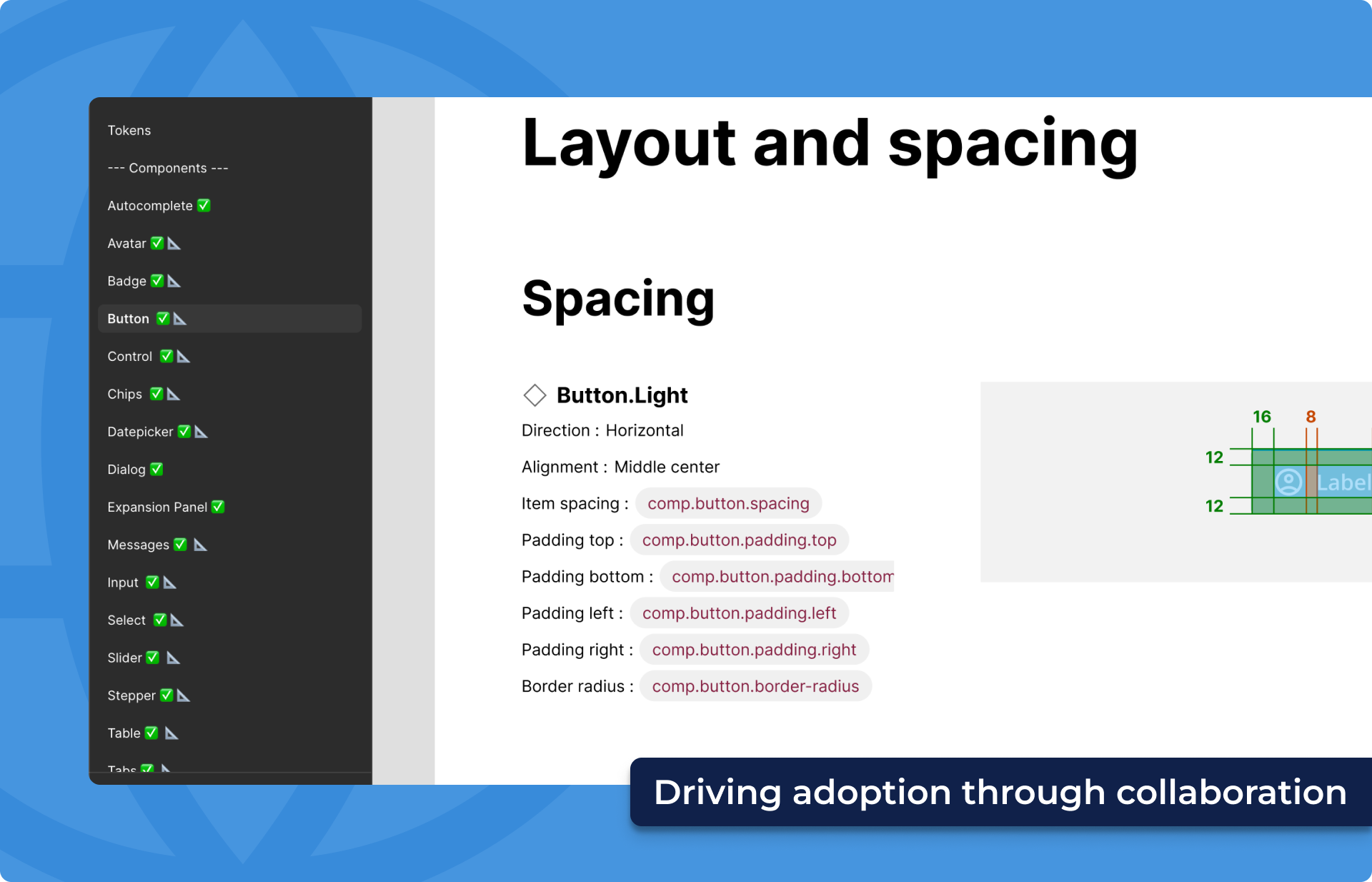
Driving system adoption through structured design reviews and cross-team governance.
A design system nobody uses is a documentation project. Getting Quantum actually adopted across four teams in three time zones took more work than building it did, and none of that work was design.
I mentored two junior designers, coaching them on the token system and on contributing back to the shared library rather than working around it. And I introduced a formal design review process, which moved the team from a siloed output model to a guild model where every feature was checked against the new global standards by people who had a stake in them.
The measure of a design system isn't the documentation. It's whether junior designers can pick it up and ship features confidently without a senior guiding them at every step. Within a few months, both designers I mentored were doing exactly that.
Design quality assurance
A single source of truth that eliminated around 80% of redundant design queries and visual inconsistencies across the four product streams.
Team capability building
Both junior designers were shipping complex features independently within months, without senior oversight.
Proving it on the hardest thing we had
Applying the new framework to Nexus to prove the versatility of a standardised UX approach.
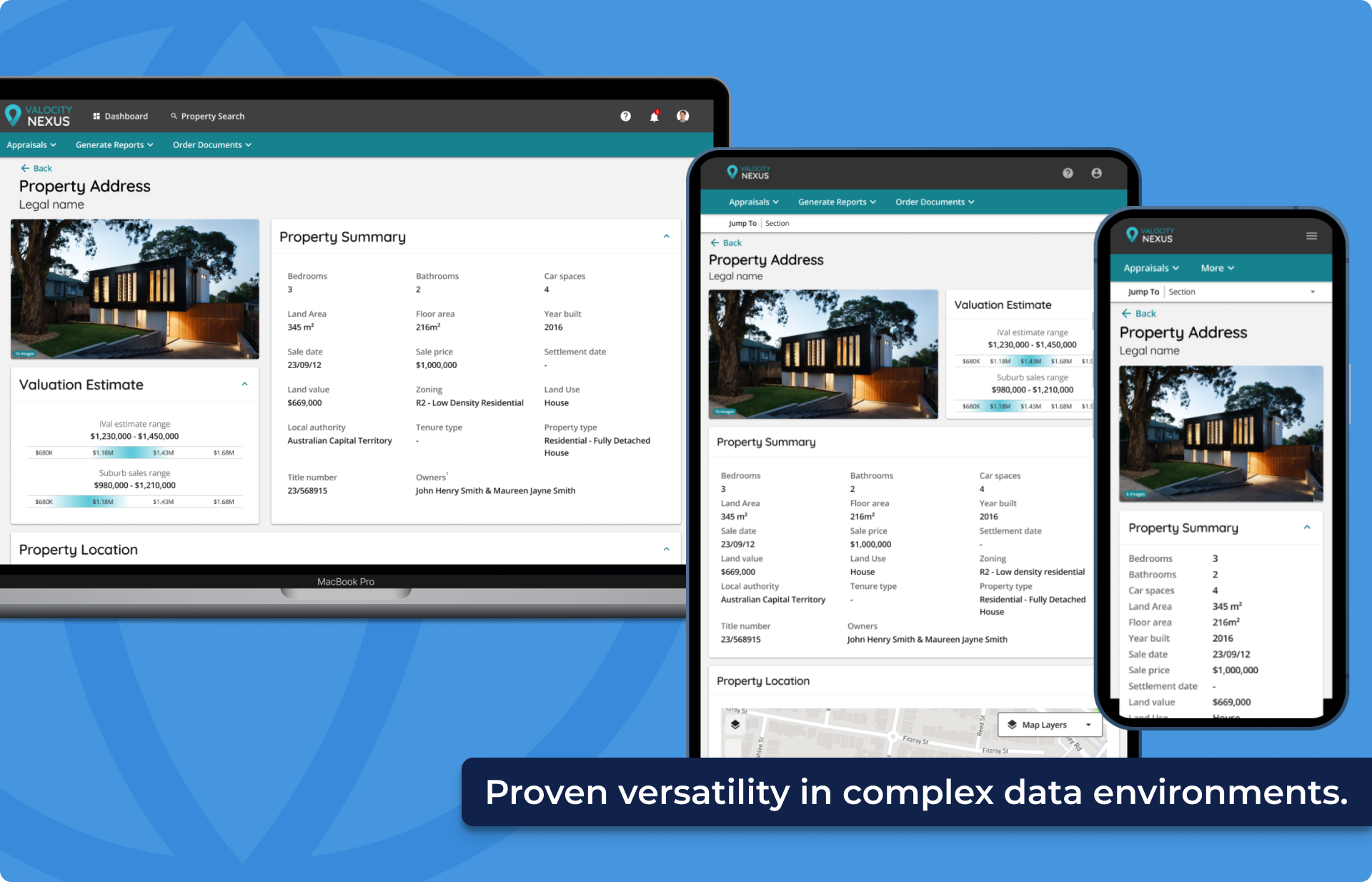
A system that only works on easy screens has not been tested. Nexus was the hardest surface in the product: a Comparative Market Analysis tool for real estate agents, dense with property data and bound by heavy regulatory requirements.
Working alongside the other team designers, I built the Nexus workflow entirely out of Quantum. It shipped meeting every regulatory requirement while needing zero training for agents who had no time to learn a new tool. That was the proof the system was structural rather than cosmetic.
What changed
Validating success through operational agility and a future-proofed design culture.
Before Quantum, four product teams were solving the same problems four different ways. After it, they were not. Redundant design queries dropped by around 80%, new bank integrations got significantly faster, and designers across New Zealand, Australia and India worked from one source of truth for the first time.
The deepest change was cultural, and it is the one I would point to first. Design stopped being the thing that slowed releases down and started being the thing that set what the business could take on next. That is what a design system is actually for.